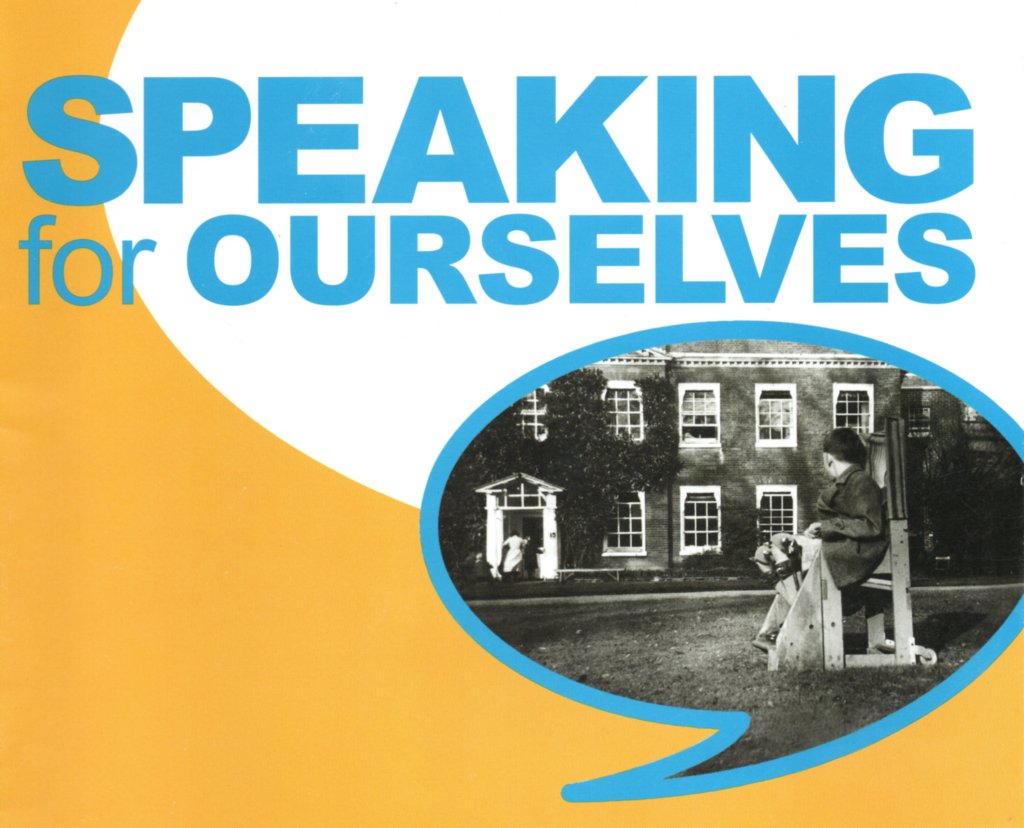
When we created the Speaking for Ourselves oral history project, one of the disabled volunteers, Ann Pridmore, asked why we were focusing on people with cerebral palsy.
It was a fair question. Disability charity Scope’s history started with people with cerebral palsy. But when you campaign for equality, you campaign for the rights of all disabled people. And when you believe in equality for disabled people, you believe in equality for everyone.
My answer was simple. We had 2 years, and we did not have the resources to capture the life stories of all disabled people. By focusing on people with cerebral palsy over the age of 50, we focused on a group under-represented in history.
The lived experience of disabled people
Ann Pridmore later said:
“Speaking for Ourselves is an exciting and valuable project. Why? Because disabled people are not included in social history. As a disabled woman with cerebral palsy, this opportunity to record our history is long overdue.”
In the 250 hours of recordings, you will find life stories that capture the diversity of experience of people with cerebral palsy, but also what it was like to be disabled in the twentieth century, from birth to old age.
Our project led to other disability groups approaching the Heritage Lottery Fund to produce their own histories. We are proud that Speaking for Ourselves is part of the oral history of disabled people.
We recruited a project co-ordinator with lived experience of cerebral palsy, Phil Mann, and 16 disabled volunteers with a range of impairments.
Phil said: “Having cerebral palsy myself, I feel tremendously motivated and inspired by such a socially and historically important project. It is vital to be able to explain ‘what it’s like’, and I hope others will gain inspiration and awareness from hearing about the lifelong experience of living with cerebral palsy.”
Helping create history
We wanted to show how society’s perception of disability changed during the 20th century. We wanted to communicate the living heritage of disabled people to a wider audience. And we wanted future generations to learn about the barriers disabled people faced in the 20th century.
Thanks to the Heritage Lottery Fund, we produced 4,000 teaching packs that secondary schools, colleges and other educators used to bring disability history to their students.
For a flavour of the powerful oral testimonies, watch the Speaking for Ourselves video.
Sadly, a cyber-attack on the British Library Sound Archive means that these recordings are not online for everybody at the moment.
While we wait for the recordings to be restored, I will share some of the stories from the collection:
- Climber John Hawkridge
- Psychotherapist Antonia Lister-Kaye
- Methodist preacher Dr Lin Berwick MBE
- Teacher Alan Counsell
- Writer Joan Ross
- Cerebral palsy diagnosis
- Medical experiences of people with CP
- School experiences of people with CP
- Experiences of disability and difference
- Work experiences of people with CP
- Relationships and people with CP
- Travel experiences of people with CP
- Disabled people campaigning for their rights
- Experiences of ageing for people with CP
Please contact me to find out more.
 Alex White writes
Leave a comment