As a lifelong member of the National Union of Journalists (NUJ), I believe that writers and photographers should get paid for their work. I also think tech giants shouldn’t be able to scrape our creative work to make huge profits out of Artifical Intelligence. Controversial, I know, but that’s why people come (or don’t come) to this blog for my ground-breaking, game-changing, earth-shattering opinions.
(more…)Welcome to my blog
-

In The Picture: disability representation in children’s books
The retirement of my friend and colleague of over 30 years, Penny Dickinson, has brought back fond memories of one of my favourite projects that we worked on together, In The Picture.
In The Picture was an innovative, 3-year Big Lottery-funded project, created by the wonderful Susan Clow,. Aimed at the children’s book world, In The Picture wanted disabled children to find themselves represented in the books they read.
Since 2006, the impact from this project continues to be profound.
(more…) -

Why the UK needs a plastic bottle deposit scheme
This hand-coloured litter box outside my local corner shop broke my heart. The label reads, “Please don’t litter. There are 2 bins. If they are full, put your rubbish in this box (thank you). Be proud. You’re saving life.”
(more…) -

Speaking for Ourselves: experiences of ageing for people with cerebral palsy
In later life, Bill Hargreaves found a new kind of equality:
“What, then, has growing older meant to me? Firstly, a much fuller and more interesting life than I could have imagined. Secondly, because most people of my age suffer from, or are beginning to suffer from various physical ailments and joint and back difficulties, there is now no difference between us. I am as able-bodied as they are, perhaps even more so, for throughout my life I have had difficulties in moving, which they are only now coming to terms with and cannot understand why I can be so cheerful!”
(more…) -

Speaking for Ourselves: disabled people campaigning for their rights
Independent living is what non-disabled people usually take for granted: living your life, deciding what you want to do and making it happen.
For many disabled people in the twentieth century, living independently was a distant dream. It often came after many years of struggle, and living in institutions, as Pauline Johnson recalls:
“Now that I am older, and I have done it since… since early forties, I feel that to lose so much independence all those years, that you could have lived independently and didn’t…
(more…) -
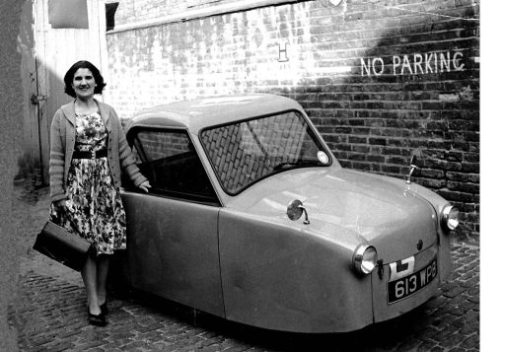
Speaking for Ourselves: travel experiences of people with cerebral palsy
After visiting a school for pupils with cerebral palsy (CP), Bill Hargreaves said:
“It’s all very well giving people a piece of paper to say they’ve got an examination pass, but have you told them how to deal with buses? Have you taught them how to use an outside phone? Have you taught them how important it is to get the work done on time? Academic learning is not enough.”
(more…) -

Speaking for Ourselves: relationships and people with cerebral palsy
One of the common misconceptions about disabled people is that they are somehow not sexual beings. The reality, of course, is that relationships are just as important to disabled people as they are to everyone else.
(more…) -

Kid for a Quid: why my son is a Reading fan
As a Norwich City fan born in Brighton, I’m a firm (if hypocritical) believer that we should support our local clubs. We live in Reading. I was never going to buy my son a Norwich City baby grow. I believed that he should choose the team he wanted to support. If it was Norwich, fine, but no pressure…
(more…) -

Speaking for Ourselves: work experiences of people with cerebral palsy
At the first Annual General Meeting of the National Spastics Society in 1952, Bill Hargreaves asked parents to think beyond schooling their disabled children. What would happen next? How would they earn a living?
(more…) -

Speaking for Ourselves: experiences of disability and difference
Barry Morgan began to realise he was different when he was 7:
“When I was about 7, I began to realise that, you know, sort of, how can I put it, being pushed around in a pushchair still at 7. You see the other kids of your own age, running and playing about, and I couldn’t. That’s when you sort of realise that ‘something wrong here’, and you get frustrated, because you want to go and run down the road, and you scream your head off to do it and you can’t do it.”
(more…)
 Alex White writes